
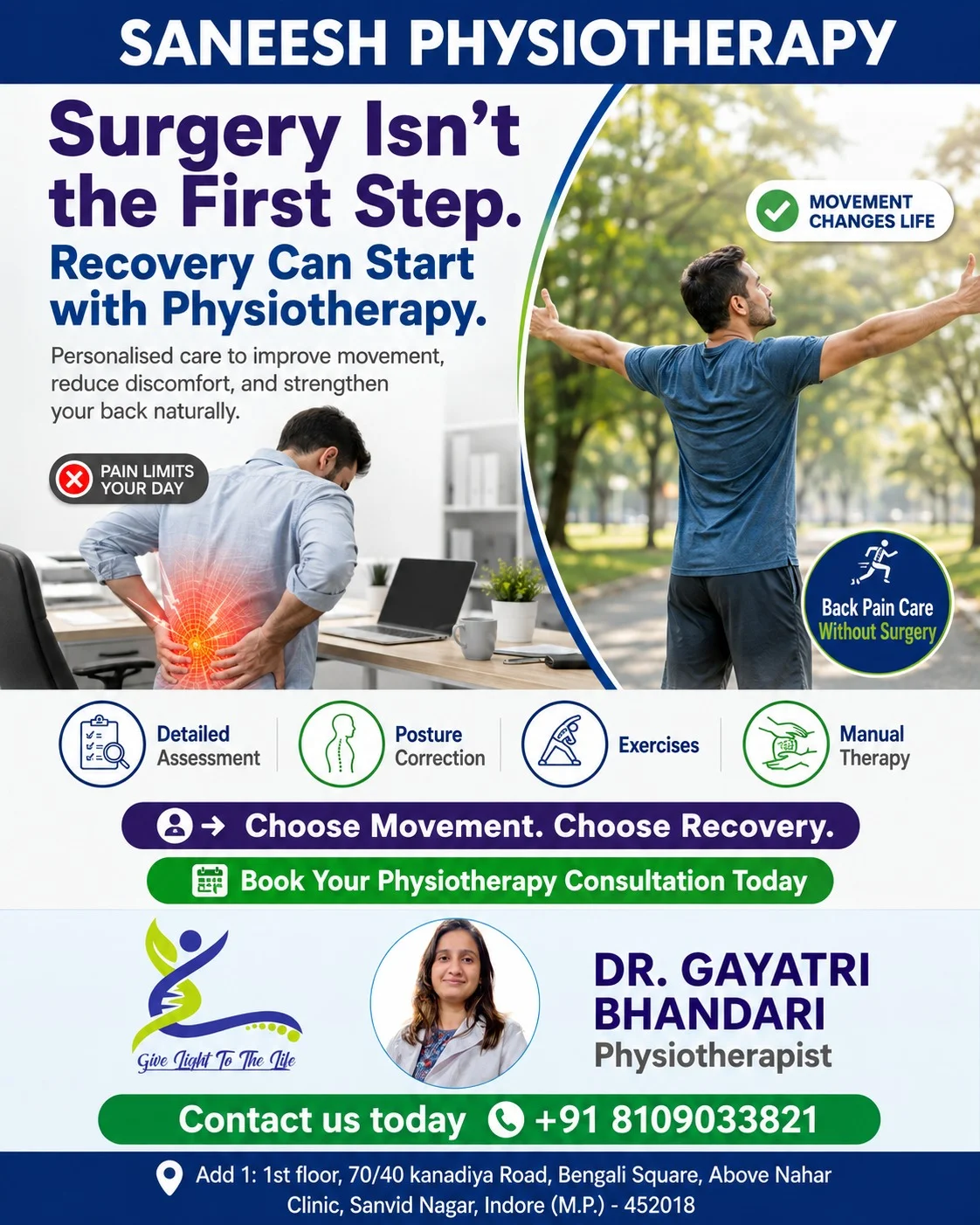
Back Pain Physiotherapy in Indore – Recovery Can Start Without Surgery
Back pain can affect much more than physical comfort. Sitting at work, getting out of bed, bending, driving, lifting household items, exercising, or even standing for long periods can become difficult when pain persists. While surgery may be necessary for certain serious spinal conditions, it is not automatically the first treatment for every episode of back pain. For many people, professional Back Pain Physiotherapy in Indore can be an important part of conservative care focused on restoring movement, improving strength, and helping patients return to everyday activities.
At Dr. Gayatri Bhandari " Saneesh physiotherapy and rehabilitation centre, patients can receive individualized physiotherapy assessment for back pain, stiffness, reduced mobility, posture-related discomfort, and functional limitations. Treatment is planned according to the patient's symptoms, movement pattern, physical ability, and recovery goals rather than following the same routine for everyone.
Back pain can develop for many different reasons. Sometimes it appears after lifting, bending, prolonged sitting, or an unfamiliar activity. In other cases, it develops gradually without one obvious trigger.
Possible contributors may include:
Because similar symptoms can arise from different conditions, professional assessment is useful before starting an intensive exercise program.
Yes, many episodes of low back pain are treated without surgery. NHS guidance encourages people with back pain to remain active, and physiotherapy may be recommended when symptoms persist. Activities such as walking, swimming, yoga, and Pilates may also be helpful for some people.
This does not mean surgery is never required. Certain structural problems, significant nerve compression, progressive neurological symptoms, or other serious conditions may need specialist medical or surgical assessment.
The important point is that back pain treatment without surgery in Indore can be considered when clinical assessment indicates that conservative rehabilitation is appropriate.
Physiotherapy is not simply massage or the use of machines. A structured rehabilitation program may focus on restoring movement, improving physical capacity, and teaching patients how to manage their condition safely.
A physiotherapist may assess:
This information helps create an individualized back pain physiotherapy program in Indore.
A proper assessment is one of the most important steps in rehabilitation.
The physiotherapist may ask:
Physical examination may then evaluate movement, strength, flexibility, and functional limitations.
A detailed assessment helps avoid giving every patient identical exercises.
Exercise is an important component of conservative management for many people with low back pain. NICE recommends considering exercise programs tailored to individual needs and capabilities for low back pain with or without sciatica.
Depending on the condition, back pain exercises in Indore may focus on:
Exercises should be selected according to the patient's condition rather than copied randomly from social media or online videos.
Muscles around the trunk, hips, abdomen, and back contribute to movement and physical control.
A progressive strengthening program may include exercises for:
The objective is not necessarily to make the back rigid. Rehabilitation aims to improve the body's ability to tolerate everyday movement and physical demands.
NHS physiotherapy resources also emphasize exercises aimed at improving strength and mobility for people with low back pain.
People often blame every back problem on “bad posture,” but posture is only one possible factor.
However, spending long hours in one position may aggravate symptoms for some individuals.
Professional posture correction physiotherapy in Indore may include:
Instead of trying to maintain one supposedly perfect posture all day, many people benefit from varying their position and staying physically active.
Manual therapy may sometimes be included as part of a broader physiotherapy program.
Techniques can include:
NICE recommends that manual therapy for low back pain should be considered only as part of a treatment package that includes exercise, rather than being used as a stand-alone solution.
This is an important distinction. Sustainable recovery often requires active rehabilitation in addition to temporary symptom-relief techniques.
Lower back pain is particularly common and may affect sitting, bending, standing, lifting, or walking.
Lower back pain physiotherapy in Indore may involve:
The exact plan depends on whether symptoms are mechanical, injury-related, associated with sciatica, or linked to another diagnosis.
Sciatica usually describes pain related to irritation or compression of the sciatic nerve, often producing symptoms that travel from the lower back or buttock into the leg.
Possible symptoms include:
NHS guidance includes physiotherapist-led advice and gentle exercise as part of managing sciatica in appropriate patients.
Sciatica physiotherapy in Indore should be individualized because the direction, severity, and neurological features of symptoms can vary significantly.
People who work at computers frequently report lower back stiffness or discomfort after remaining seated for long periods.
Physiotherapy may help by addressing:
Simple lifestyle changes such as standing up regularly and varying working positions may complement therapeutic exercise.
The aim is to make the body more capable of managing normal work demands rather than encouraging fear of sitting.
Lifting-related pain may occur following sudden overload or unfamiliar physical activity.
Early rehabilitation may include:
The long-term objective can include helping the patient return safely to occupational or household activities.
Complete bed rest for extended periods is generally not encouraged for uncomplicated back pain; NHS guidance advises staying active where possible.
Older adults may experience back discomfort alongside reduced strength, stiffness, balance problems, or age-related changes.
A carefully designed rehabilitation program may emphasize:
Age itself does not automatically mean exercise should be avoided. The intensity and type of rehabilitation should simply match the person's health and functional ability.
There is no fixed recovery timeline for back pain.
Progress depends on:
Some people improve relatively quickly, while chronic or recurrent problems may require a longer rehabilitation period.
Regular reassessment allows exercises and activity levels to be adjusted as recovery progresses.
Most back pain is not caused by a serious condition, but certain symptoms require prompt medical assessment.
Seek urgent care if back pain is associated with symptoms such as:
These symptoms should not be managed only with routine physiotherapy.
Two people describing “lower back pain” may need completely different treatment strategies.
For example:
This is why physiotherapy for back pain in Indore should begin with assessment rather than automatically prescribing a fixed exercise sheet.
Fear of movement can sometimes lead people with back pain to avoid activity for long periods.
However, staying appropriately active is an important part of back pain management. NHS guidance recommends continuing normal activities as much as possible, while physiotherapy resources encourage gradual movement and exercise.
The goal is not to push through severe symptoms without guidance. It is to progressively rebuild safe movement based on individual tolerance.
Depending on assessment findings, rehabilitation may combine:
This combination creates a more comprehensive approach than relying on passive treatment alone.
Back pain should not automatically lead to the assumption that surgery is the only solution. For appropriate patients, structured rehabilitation can focus on movement, strength, function, and confidence.
At Dr. Gayatri Bhandari " Saneesh physiotherapy and rehabilitation centre, professional Back Pain Physiotherapy in Indore is focused on detailed assessment, posture and movement guidance, exercise-based rehabilitation, manual therapy when appropriate, and personalized recovery planning.
The goal is to help patients return progressively to the activities that matter to them rather than relying solely on temporary symptom relief.
Yes, many people with uncomplicated low back pain are managed conservatively. Exercise, staying active, and physiotherapy can form part of treatment, depending on the diagnosis.
Generally, prolonged bed rest is not advised for routine back pain. Staying appropriately active and gradually returning to normal activities is commonly recommended.
Not usually as a stand-alone strategy. NICE recommends considering manual therapy as part of a package that includes exercise.
The number of sessions varies according to the cause, duration, severity, physical condition, response to rehabilitation, and individual recovery goals.
Persistent back pain can gradually interfere with work, exercise, sleep, travel, and everyday movement. A professional assessment can help identify your functional limitations and determine whether conservative physiotherapy is appropriate for your condition.
If you are looking for Back Pain Physiotherapy in Indore, choose a personalized rehabilitation approach centered on movement, strengthening, posture guidance, exercise, and functional recovery.
Contact Us today to book your physiotherapy consultation and take the next step toward better movement, improved strength, and a more active daily life.
| Tags: | #Back Pain Physiotherapy in Indore |


