
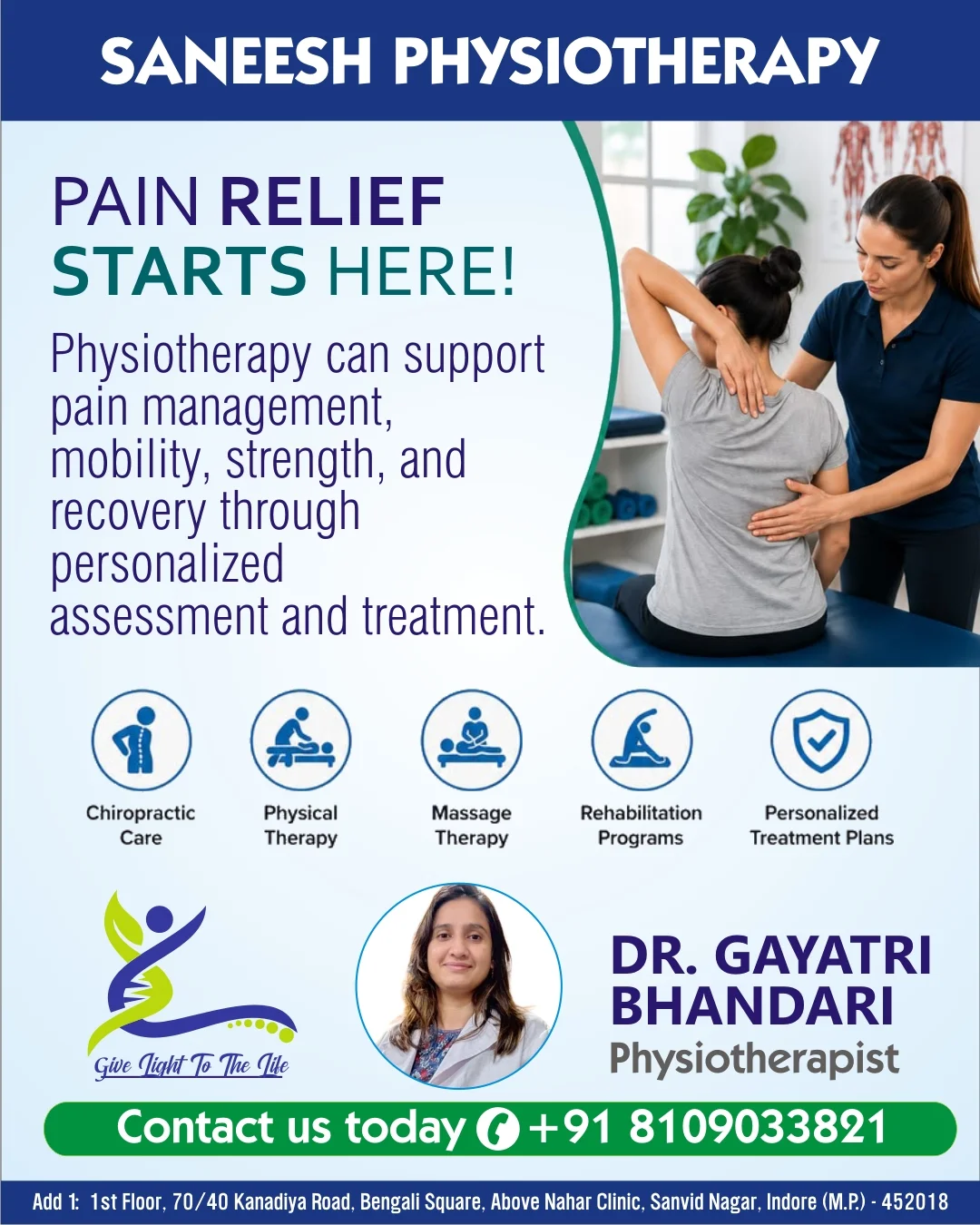
Pain often changes the small details of everyday life. Reaching a kitchen shelf, sitting through a meeting, or getting up from a chair may become uncomfortable. When movement starts affecting your routine, understanding the problem is an important step towards managing it. Saneesh Physiotherapy, with Dr. Gayatri Bhandari, provides a local contact near Bengali Square, Indore for discussing physiotherapy needs. A suitable plan should connect your symptoms with practical goals, such as walking comfortably, returning to work, or recovering after an injury.
How Can Physiotherapy Help with Pain?
Physiotherapy can support pain management, movement, strength, and recovery through assessment and treatment tailored to the individual. Depending on the condition, care may include exercises, advice about activity, and appropriate hands-on techniques. The approach should account for your medical history, current abilities, and the tasks you want to manage more comfortably.
Start with What Pain Is Stopping You from Doing
Two people can describe the same painful area but need different help. One person with shoulder discomfort may struggle to dress, while another finds lifting equipment at work difficult. Those differences matter when setting treatment goals.
Before your appointment, think about the activities that have become harder. Explain how symptoms affect work, sleep, exercise, and household responsibilities. Mention what makes the discomfort better or worse and whether the problem followed an injury.
Clear examples give your physiotherapist something useful to assess and review as treatment progresses.
Problems That May Benefit from Physiotherapy Assessment
Back and Neck Pain
Back pain and neck pain can have several causes. An assessment helps identify the relevant movement difficulties and whether physiotherapy or another medical evaluation is appropriate.
For many people with low back pain, advice about remaining active and a suitable exercise programme can form part of care. Treatment should reflect the person’s needs and capabilities.
Shoulder, Knee, and Other Joint Problems
Difficulty reaching overhead, climbing stairs, or walking comfortably may prompt someone to seek joint pain physiotherapy. The assessment may consider joint movement, muscle strength, and how the affected area functions during daily tasks.
The plan depends on the underlying condition and clinical findings. Bring relevant medical advice or reports if you have already been assessed elsewhere.
Recovery After Injury or Surgery
Rehabilitation can help people work towards improved movement, strength, and function after an injury or operation. Exercises and activity should be introduced at an appropriate stage of recovery.
After surgery, share your discharge summary and the surgeon’s instructions. Weight-bearing limits, movement precautions, and wound-related advice may affect the rehabilitation plan.
What Happens at a Physiotherapy Appointment?
A first visit generally includes a discussion of your symptoms, medical history, lifestyle, and goals. Tell the physiotherapist about previous injuries, operations, medicines, and any changes in your health.
The physical assessment may involve checking movement, strength, balance, or how you perform relevant activities. The choice of checks depends on your problem.
Before treatment, ask for an explanation of:
You should have the opportunity to discuss concerns and ask questions about the proposed care.
Why Exercise Is Often an Important Part of Treatment
Therapeutic exercise may focus on movement, strength, balance, or the ability to manage a specific activity. An exercise programme should suit your starting point and progress as appropriate.
This might mean working towards a comfortable movement before adding resistance, or building confidence with an everyday task. The details depend on your assessment; copying another person’s routine may not address your needs.
Ask the physiotherapist to demonstrate your exercises and watch you try them. Make sure you understand the frequency, technique, and any precautions. If the programme is difficult to fit around work or family responsibilities, discuss a manageable version.
Understanding Hands-On Treatment and Massage
Manual therapy involves hands-on techniques that may be used to address pain or movement problems. Massage can be one component when clinically appropriate.
For low back pain, clinical guidance recommends considering manual therapy as part of a treatment package that includes exercise. Ask how any hands-on treatment connects with your wider recovery goals and the activities you practise independently.
The treatment method should follow the assessment. A useful discussion focuses on its purpose, expected role, and how progress will be reviewed.
What You Do Between Visits Matters
The time between appointments provides opportunities to practise agreed activities and understand how your symptoms respond. Keep the plan accessible, whether that means written instructions or a simple exercise record.
Helpful steps include:
If an exercise significantly increases your pain or causes unexpected symptoms, contact your physiotherapist for advice. The movement, intensity, or overall plan may need reassessment.
Measuring Progress Beyond a Pain Score
Pain intensity is one part of the picture. Physiotherapy rehabilitation may also be reviewed through changes in movement and daily function.
Depending on your goals, useful questions include:
Discuss these changes at follow-up appointments. Progress and the number of visits required vary with the condition, clinical findings, and response to treatment.
When Pain Needs Urgent Medical Attention
Some symptoms require medical assessment before routine physiotherapy. Seek urgent advice if back pain becomes severe quickly or occurs with fever or feeling generally unwell.
Seek emergency care for back pain with new bladder or bowel control changes, loss of sensation around the genitals or anus, or symptoms affecting both legs such as weakness or numbness. Back pain after a serious accident also needs emergency assessment.
Tell your clinician about unexplained weight loss, persistent night pain, or other significant changes in health. These details can affect the next steps.
Frequently Asked Questions
1. Is physiotherapy only useful after an injury?
No. Physiotherapy is also used for conditions affecting movement, joint and muscle problems, and recovery after surgery. An assessment helps establish whether it is suitable for your particular concern.
2. How many physiotherapy sessions will I need?
The number depends on your condition, goals, assessment findings, and progress. Ask when the plan will be reviewed and what changes would indicate that further sessions or another approach are needed.
3. Should I continue an exercise if it increases pain?
Ask in advance what symptom response is acceptable for your condition. If pain increases significantly or you develop unexpected symptoms, seek advice instead of forcing the exercise. The programme may need adjustment.
4. Is massage the same as a complete physiotherapy plan?
Massage may be one part of treatment. Physiotherapy can also involve assessment, exercises, activity advice, and rehabilitation goals. The appropriate combination depends on the individual problem.
5. What should I bring to my first appointment?
Bring relevant reports, a medicine list, previous treatment details, and any surgical instructions. Wear comfortable clothing that allows assessment of the affected area, and note the activities you most want help with.
Book a Physiotherapy Consultation in Indore
Considering Physiotherapy for Pain Relief in Indore? Contact Saneesh Physiotherapy to arrange an assessment with Dr. Gayatri Bhandari and discuss your movement, pain-management, or rehabilitation needs.
If stairs are difficult, ask about access arrangements when booking. Contact Us today to book your appointment and discuss a plan suited to your needs.
10 Physiotherapist in Indore, physiotherapy in indore, physiotherapist near me Indore, physiotherapy clinic in Indore, best physiotherapist in Indore, physio near me Indore, back pain physiotherapy Indore, knee pain physiotherapy Indore, frozen shoulder treatment Indore, neck pain physiotherapy Indore, slip disc treatment Indore, sciatica physiotherapy Indore, physiotherapy for paralysis in Indore, sports injury physiotherapy Indore, physiotherapy at home in Indore, cupping therapy Indore, dry needling therapy Indore, joint pain physiotherapy Indore, post-surgical rehabilitation Indore, physiotherapy for knee replacement Indore, sciatica nerve pain treatment Indore, physiotherapy for stroke patients Indore, arthritis pain relief Indore, physiotherapy for cerebral palsy Indore, posture correction exercises Indore, physiotherapy for tennis elbow Indore, physiotherapy for shoulder pain Indore, physiotherapy after fracture Indore, foot drop physiotherapy treatment Indore, physiotherapy for balance and gait training Indore, dry needling for back pain Indore, physiotherapy home visit Indore, sports injury clinic Indore, cupping therapy near me Indore, physical therapy services Indore, rehabilitation services in Indore, female physiotherapist Indore, cost of physiotherapy in Indore, how to treat back pain with physiotherapy, what is manual therapy in physiotherapy, best physiotherapy hospital in Indore, physiotherapy for pregnant women Indore
| Tags: | #Physiotherapy for Pain Relief in Indore |


