
Neuro Robotics Physiotherapy in Indore for Advanced Mobility Rehabilitation
Neurological conditions can affect walking, balance, coordination, muscle control, posture and the ability to complete everyday activities independently. Recovery often requires structured rehabilitation that combines clinical assessment, repetitive movement training, strengthening and functional practice. Modern technology can further support this process by helping patients practise movements in a controlled and measurable manner.
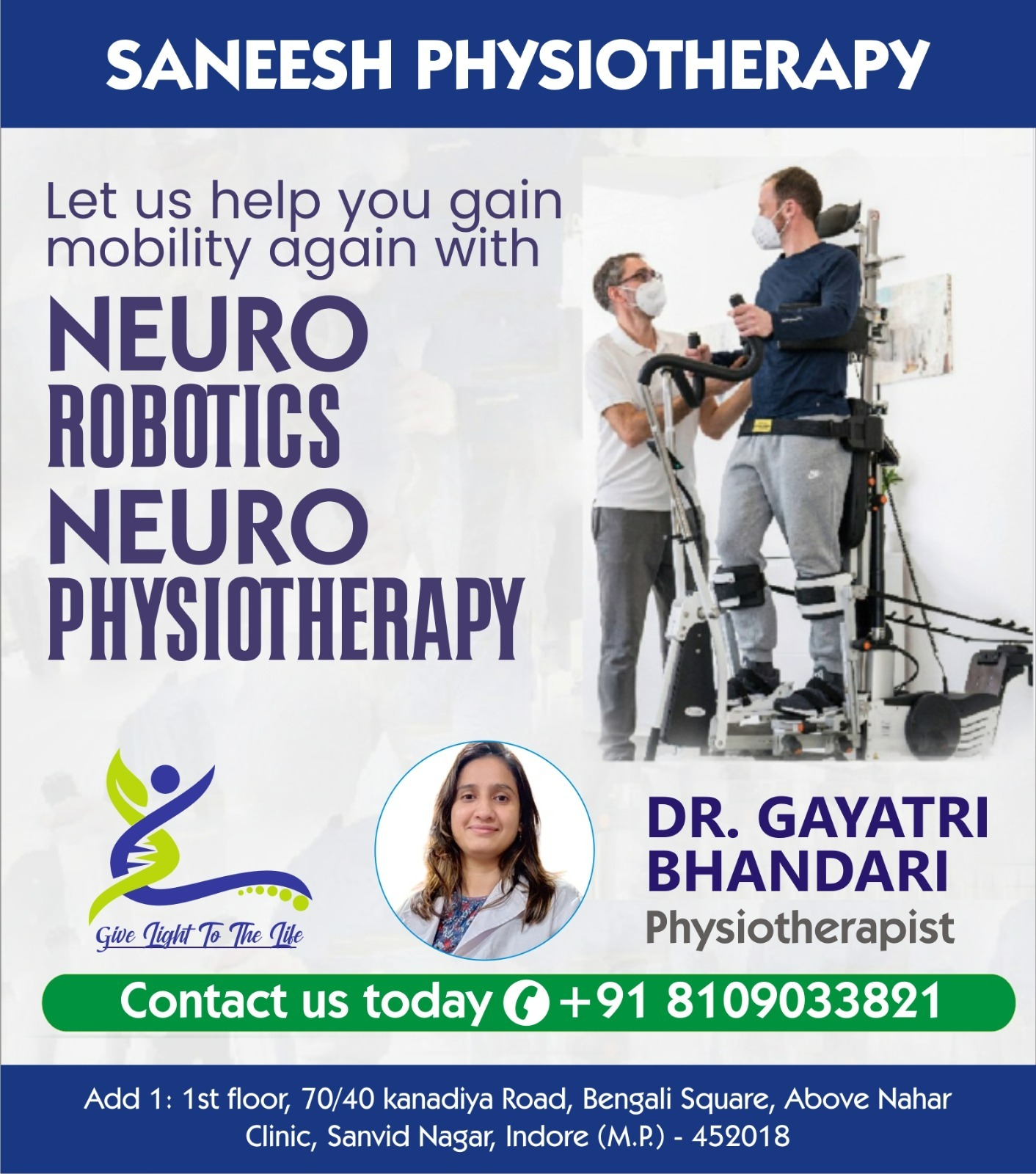
Professional Neuro Robotics Physiotherapy in Indore combines neurological rehabilitation principles with technology-assisted movement training. Depending on the patient’s condition, robotic systems may assist standing, stepping, walking or limb movement while the physiotherapist monitors alignment, effort, safety and progress.
At Saneesh Physiotherapy, rehabilitation programmes are planned according to the patient’s neurological condition, current mobility, functional goals and medical history rather than following the same routine for everyone.
Neuro robotics physiotherapy refers to the use of robotic or electromechanical rehabilitation equipment alongside conventional physiotherapy for people experiencing movement limitations due to neurological conditions.
Robotic devices may support the body, guide specific movement patterns and allow repeated practice of tasks such as stepping or moving an affected limb. Some systems provide partial assistance, while others adjust the support according to the patient’s ability.
The World Health Organization describes rehabilitation as a collection of interventions designed to optimise functioning and reduce disability. Physiotherapists are among the professionals involved in helping people improve mobility and participation in daily life.
Robotic technology does not replace a physiotherapist. It functions as an additional rehabilitation tool within a clinically supervised programme.
A neuro physiotherapy centre in Indore may support individuals experiencing movement difficulties after an injury or neurological diagnosis. Suitability depends on medical stability, muscle strength, joint condition, cognitive ability, balance and rehabilitation goals.
Neuro rehabilitation may be considered for people affected by:
Research on robotic rehabilitation has included people with stroke, spinal cord injury, cerebral palsy, multiple sclerosis, Parkinson’s disease and acquired brain injury. However, results differ according to the condition, device, treatment intensity and individual patient factors.
Before starting robot-assisted physiotherapy in Indore, the physiotherapist usually assesses the patient’s movement abilities and identifies which activities require assistance.
A session may involve the following stages:
The therapist may examine:
The findings help determine whether robotic rehabilitation is appropriate and how much assistance should be provided.
The patient may be secured using belts, braces, harnesses or body-weight support systems. Correct positioning is important to reduce discomfort and promote a more suitable movement pattern.
The robotic device may guide the legs or arms through repeated movements. Repetition is a central part of motor rehabilitation because the nervous system needs regular task practice to relearn or strengthen movement patterns.
As the patient improves, the level of machine assistance, speed, duration or resistance may be modified. The aim is usually to encourage active patient participation rather than allowing the device to perform all the work.
The therapist observes movement quality, fatigue, posture and tolerance throughout the session. Some devices may also record performance-related information that can support progress tracking.
Robotic systems can offer certain practical advantages when used for appropriately selected patients under professional supervision.
Traditional gait practice can be physically demanding for both the patient and therapist. A robotic system may make it possible to complete a larger number of controlled stepping movements during a session.
Patients who cannot initially bear their full body weight may be able to practise upright movement with partial body-weight support.
A device can guide the limbs repeatedly through a selected movement pattern. The physiotherapist can then focus on posture, alignment and active engagement.
Support may be modified according to the patient’s strength, endurance and control. This allows the programme to progress gradually.
A supported environment may help some patients feel more confident while attempting standing or walking activities.
Certain rehabilitation systems provide information about duration, distance, repetitions or assistance levels. These measurements may help document changes over time.
Recent reviews suggest that robotic lower-limb devices show potential in neurological rehabilitation, particularly after stroke. Research has reported possible improvements in areas such as walking, balance and motor function, although benefits are not identical for every patient.
A stroke can affect one side of the body and may lead to weakness, altered muscle tone, balance problems and difficulty walking. The extent of disability depends partly on the location and size of the brain injury.
Stroke physiotherapy in Indore may include:
Robotic rehabilitation may be included when it supports the patient’s specific movement goals.
A spinal cord injury may affect strength, sensation, balance and voluntary control below the level of injury. Rehabilitation can include physical therapy, assistive technology, electrical stimulation and robot-assisted training.
A carefully supervised programme may focus on:
Parkinson’s disease may affect movement speed, posture, balance, step length and coordination. Neurological physiotherapy in Indore can focus on walking strategies, posture, flexibility, balance and functional movement practice.
Robotic support may be considered for selected patients, but it should remain part of a broader rehabilitation plan.
After a brain injury, individuals may experience weakness, coordination problems, reduced balance, altered muscle tone or difficulty completing complex movements.
Rehabilitation is usually personalised according to the affected functions, level of alertness, cognitive status and overall medical condition.
Multiple sclerosis can produce fatigue, weakness, stiffness, balance changes and walking difficulties. The rehabilitation plan should account for fluctuating symptoms and avoid excessive fatigue.
Robotic physiotherapy and conventional physiotherapy should not be viewed as competing treatments. They are often most useful when combined.
Conventional physiotherapy remains important for:
Robotics may add structured repetition, body-weight support and measurable assistance. A systematic review of upper-limb neurorehabilitation noted that robotic systems can contribute to rehabilitation, but their clinical use remains connected to therapist-led assessment and planning.
The most appropriate combination depends on the patient’s diagnosis, stage of recovery, tolerance and functional priorities.
A personalised neuro rehabilitation programme in Indore may include several treatment approaches rather than relying on one machine or exercise.
Depending on the assessment, the programme may involve:
Goals should be realistic and measurable. Examples may include sitting unsupported, standing with assistance, improving step quality, walking a selected distance or completing daily transfers more safely.
There is no fixed number of sessions that applies to every neurological patient. Recovery depends on many factors, including:
Some patients may need an intensive rehabilitation phase followed by maintenance therapy. Others may benefit from shorter programmes focused on specific functional goals.
The physiotherapist should reassess progress periodically and modify the programme accordingly.
Rehabilitation is often most useful when it starts as soon as the treating medical team considers the patient stable and ready. Early intervention may help address mobility limitations, positioning, stiffness and loss of strength.
However, rehabilitation can also provide value months or years after the original neurological event, particularly when the person has new functional goals or has experienced a decline in mobility.
Patients should seek assessment when they notice:
Not every patient is immediately suitable for robotic training. The physiotherapist may need to consider blood pressure, cardiac health, bone strength, skin condition, joint restrictions, pain, fractures and medical precautions.
Training may require modification or postponement when a patient has:
A medical referral or clearance may be required in certain cases.
When looking for the best neuro physiotherapy in Indore, choose a centre that focuses on assessment, safety and functional improvement rather than presenting technology as a guaranteed cure.
A responsible rehabilitation provider should:
Technology is most valuable when it is selected for a clear clinical reason.
Robotic training may support walking practice, but recovery varies according to the neurological condition, severity of damage and individual response. No device can guarantee complete recovery.
The training should not cause severe pain. Some patients may experience temporary muscle fatigue or stretching discomfort. Any pain should be reported immediately so the session can be adjusted.
Age alone does not determine suitability. Medical stability, bone health, joint movement, strength and treatment tolerance are more important factors.
No. Home exercises and functional practice remain important parts of neurological rehabilitation. The physiotherapist may provide a programme based on the patient’s abilities and safety needs.
Movement limitations following stroke, spinal cord injury, brain injury or another neurological condition can affect independence and confidence. A structured rehabilitation programme can help patients work towards meaningful goals through guided movement practice, strengthening and functional training.
For personalised Neuro Robotics Physiotherapy in Indore, consult Saneesh Physiotherapy for professional assessment and rehabilitation planning under the guidance of Dr. Gayatri Bhandari. Contact Us Today to schedule an evaluation and take a purposeful step towards improved mobility and everyday function.
| Tags: | #Neuro Robotics Physiotherapy in Indore |


