
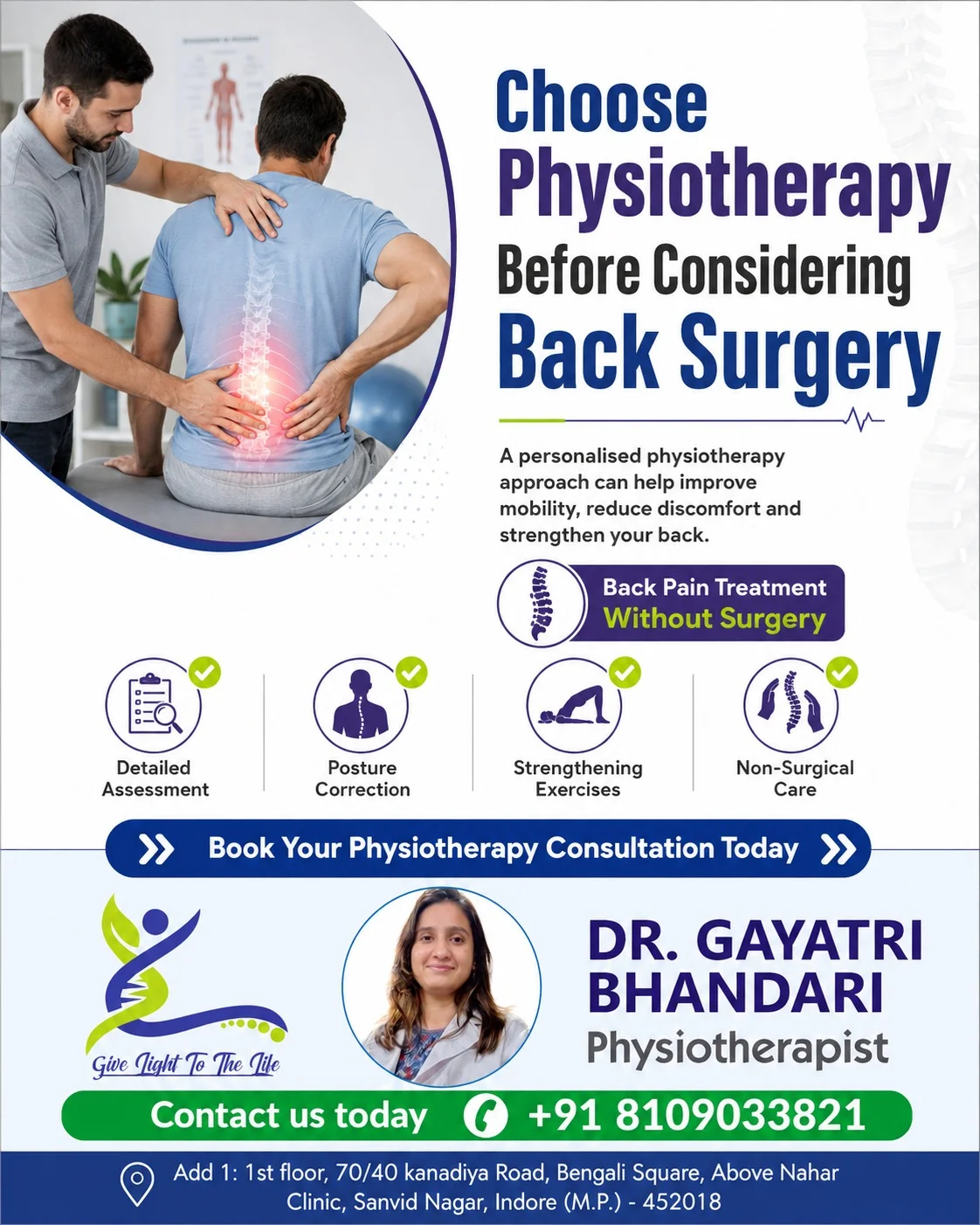
Back pain can make ordinary tasks feel demanding. Sitting through a meeting, lifting a shopping bag, or getting out of bed may require more thought than before. When discomfort continues, it is understandable to wonder whether surgery is the next step.
For many people, Back Pain Physiotherapy in Indore offers an opportunity to explore appropriate conservative care. Physiotherapy can support movement, strength, and everyday function, although its suitability depends on the cause of pain. Conditions requiring urgent medical or surgical attention should not be delayed.
Dr. Gayatri Bhandari offers physiotherapy consultations in Indore. An assessment provides a starting point for understanding your difficulties and discussing a rehabilitation plan suited to your needs.
Can Physiotherapy Help Before Back Surgery?
Physiotherapy may be appropriate before considering surgery for many common back problems. Exercise, education, and supported self-management are recognised approaches for managing nonspecific or chronic primary low back pain. Treatment should reflect the individual’s symptoms and circumstances.
However, back pain treatment without surgery is not a promise that every spinal condition can be managed conservatively. If surgery has been recommended, ask the treating specialist whether a physiotherapy trial is appropriate and whether waiting carries any risk.
The useful question is: “Which approach is suitable for my condition, and how will we judge whether it is helping?”
Start with an Assessment, Not a Standard Exercise List
Two people with lower back pain may struggle with very different activities. One finds prolonged sitting difficult; another experiences pain while walking or bending.
A physiotherapy assessment helps organise these details and establish meaningful goals. Prepare to explain:
Bring existing reports and prescriptions. If you have been advised to undergo a procedure, share that recommendation so the physiotherapist understands the wider treatment plan.
What Can a Personalised Physiotherapy Plan Include?
Movement and Activity Guidance
Physical rehabilitation can help people improve movement and return to activities affected by back pain. For nonspecific low back pain, physical therapies and an appropriate return to activity form part of recommended care.
Your goals should be concrete. You might want to tolerate a work meeting, walk to nearby shops, or manage a staircase more comfortably.
Explain which task matters most. This gives the treatment discussion a clear purpose beyond simply recording a pain score.
Progressive Strengthening
Back strengthening exercises may form part of rehabilitation, with the programme selected according to your abilities and response. Structured exercise is among the approaches recommended for chronic primary low back pain.
Ask for clear instructions on technique, frequency, and progression. You should also know what to do if an exercise causes a significant increase in symptoms.
An exercise shown in an advertisement is an illustration, not an individual prescription. Its suitability needs to be assessed before you copy it.
Guidance for Everyday Positions and Tasks
Discuss the situations in which discomfort builds: a long commute, computer work, cooking, or repeated lifting.
For physiotherapy in Indore, practical advice should account for your actual surroundings. Describe your chair, desk, working hours, and opportunities to change position.
If a suggested adjustment is difficult to follow, explain why. A recommendation that fits your routine is more useful than one you cannot implement.
Hands-On Treatment Where Appropriate
Manual therapy may be considered for some people with low back pain. NICE recommends using it as part of a treatment package that includes exercise, rather than as a standalone approach.
Ask how any hands-on technique supports your rehabilitation goals. Understanding its purpose helps you take an active role in treatment.
When Should Medical Assessment Come First?
Some symptoms need urgent attention rather than a routine physiotherapy appointment.
Seek emergency care for back pain accompanied by:
These can indicate problems that require immediate assessment.
Back pain with fever, feeling generally unwell, or severe pain that starts suddenly or worsens quickly also needs urgent medical advice.
If symptoms change while you are receiving treatment, report them promptly. A previous assessment does not remove the need to review a new concern.
What If Your Scan Mentions a Disc Problem?
Terms such as “disc bulge” or “slipped disc” can understandably cause worry. However, some disc changes do not produce symptoms. The scan needs to be considered alongside your symptoms and clinical examination.
When discussing lower back pain treatment in Indore, ask your clinician to explain:
Avoid making a surgery decision from the report wording alone. Equally, do not disregard a specialist’s recommendation because someone with a similar report improved through a different treatment.
Set Goals You Can Recognise in Daily Life
Rehabilitation aims to improve everyday functioning and participation in work, family life, and recreation.
Instead of setting only a broad goal such as “fix my back,” choose activities you can describe clearly.
Examples might include:
Ask how these goals will be reviewed. A brief record of what you could do before treatment and what has changed can make follow-up discussions more useful.
Make Home Practice Manageable
A home programme should come with enough explanation for you to follow it confidently. Before leaving an appointment, demonstrate the exercises back to the physiotherapist and clarify anything uncertain.
Ask about the expected time commitment and what to do on a difficult day. Mention space limitations, caregiving responsibilities, or work shifts that affect practice.
For people seeking back pain rehabilitation near Bengali Square, appointment access is one consideration; the ability to carry out the agreed plan between visits is another.
Bring questions to your next session. If a movement feels confusing, request another demonstration rather than repeatedly guessing the technique.
How Should Progress Be Reviewed?
A useful review considers symptoms, movement, and the activities you are trying to regain. Describe improvements and remaining limitations separately.
For example, “Walking is easier, but sitting still brings on leg pain” gives a clearer picture than saying you feel slightly better.
Agree on a review point and ask what would lead to a change in approach. If progress is limited or symptoms worsen, the next step may involve reassessment or further medical input. Ongoing care should have a clear purpose, not simply repeat the same sessions indefinitely.
Frequently Asked Questions
1. Does back pain always require surgery?
No. Many common back problems are managed with conservative approaches. The right treatment depends on the diagnosis, symptoms, and clinical findings; urgent conditions require a different pathway.
2. Should I stay in bed until the pain disappears?
Prolonged bed rest is generally discouraged for uncomplicated back pain. Gentle movement and suitable activity are commonly recommended, with individual advice where needed.
3. How many physiotherapy sessions will I need?
There is no fixed number suitable for everyone. Ask for an initial plan, review milestones, and an explanation of how further sessions will be decided.
4. Can I start physiotherapy if surgery has already been advised?
Discuss this with the treating specialist first. Ask whether rehabilitation is appropriate before surgery and whether delaying the proposed procedure would be safe in your particular case.
Take an Informed Next Step for Your Back
Understanding your options can make treatment decisions less overwhelming. A clear assessment, practical goals, and regular review help you know what your rehabilitation is working towards.
Consult Dr. Gayatri Bhandari for Back Pain Physiotherapy in Indore and discuss whether a personalised conservative care plan is appropriate for you.
Contact Us today to book your physiotherapy consultation.
| Tags: | #Back Pain Physiotherapy in Indore |


