
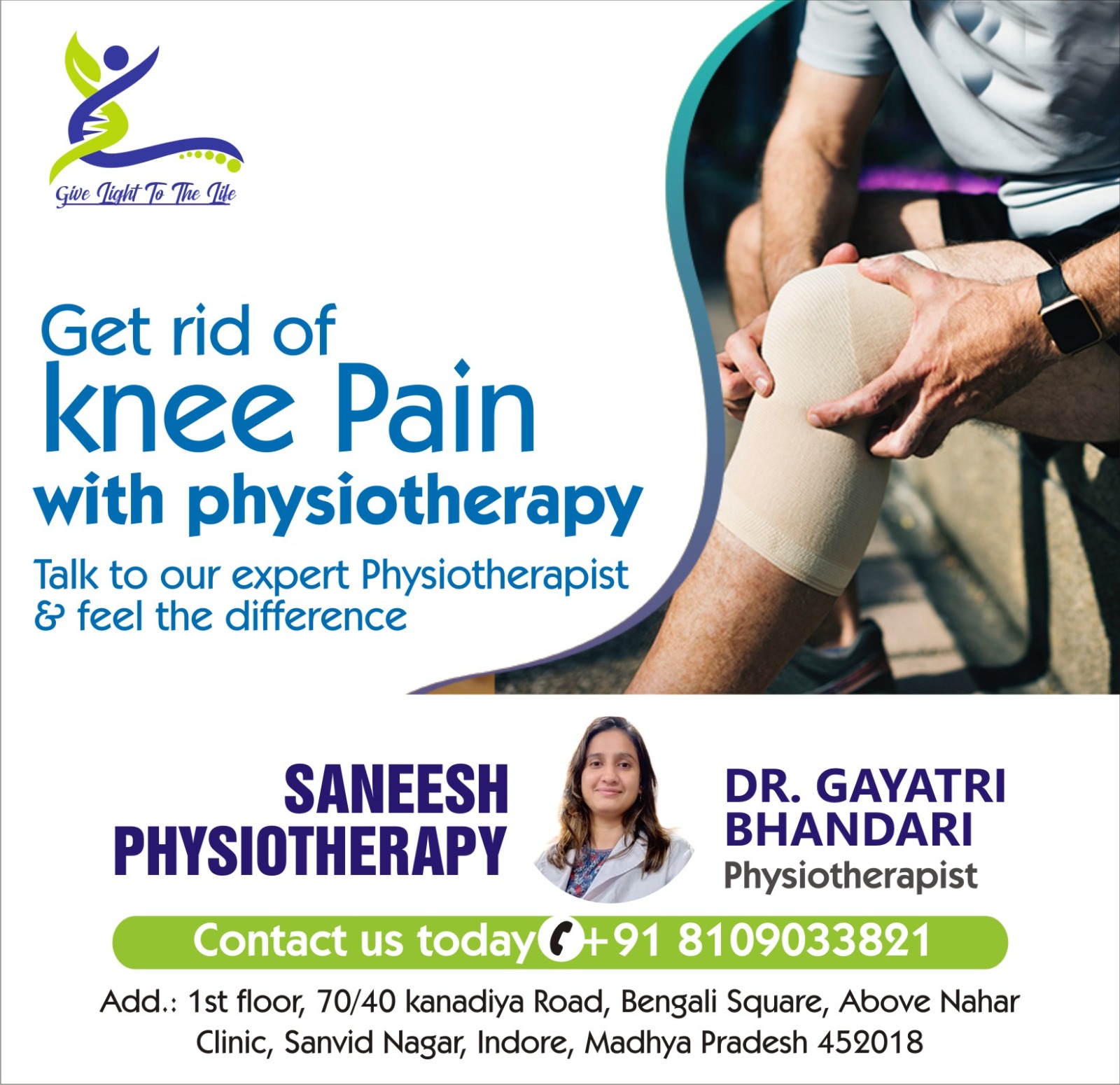
Getting up from a chair, climbing stairs, or walking to the nearby market can become frustrating when your knee hurts. You may start avoiding certain movements without realising how much your routine has changed.
If you are searching for a Knee Pain Physiotherapist in Indore, Saneesh Physiotherapy and Rehabilitation Centre, with Dr. Gayatri Bhandari, is a place to discuss your symptoms and rehabilitation needs. The starting point is understanding what troubles your knee and which everyday activities you want to regain.
Physiotherapy for knee pain can help improve strength, movement, and day-to-day function when it is appropriate for the underlying condition. Treatment usually combines assessment, education, and a personalised exercise programme.
The plan should reflect your symptoms, physical abilities, health history, and goals. Some people need rehabilitation for an ongoing knee condition; others need medical assessment or coordinated care following an injury.
Arrange urgent medical assessment if:
These symptoms should be assessed before starting a routine exercise programme. A hot, red knee with fever can indicate an infection and needs urgent attention.
Knee pain has several possible causes. Symptoms can follow an injury, develop after a change in activity, or occur alongside a joint condition.
Common examples include:
Pain location provides useful information, but it does not establish the diagnosis by itself. A proper assessment helps distinguish between conditions that may feel similar.
An assessment should explore how the problem affects your life. Explain when the pain began, whether there was an injury, and what makes symptoms better or worse.
Your physiotherapist may assess:
Bring previous reports and details of any surgery or treatment. Mention what you hope to achieve, whether that means completing a work shift comfortably or returning to a favourite activity.
The findings help guide treatment and identify whether another healthcare professional should be involved.
Knee strengthening exercises are selected according to your assessment. Depending on the condition, work may involve the thigh, hip, and other muscles that support movement.
For patellofemoral pain, strengthening around the hip and knee is an important part of treatment. The challenge should progress gradually as your abilities improve.
Ask your physiotherapist to explain the exercise, demonstrate the technique, and clarify how your symptoms should guide progression.
For knee osteoarthritis treatment, therapeutic exercise is a core part of care. It can include local muscle strengthening and activity to improve general fitness, tailored to your needs.
Some discomfort can occur when exercise begins. Your clinician should explain what is acceptable and when the programme needs adjusting. Regular participation matters, and a manageable routine is easier to maintain.
Avoid treating every uncomfortable movement as proof that the joint is being damaged. Discuss your response to exercise so the plan can be adapted appropriately.
Rehabilitation should connect exercises with the activities you need. This may include practising chair transfers, stair use, walking, or balance.
After knee surgery, these tasks are introduced according to the procedure, recovery stage, and instructions from the treating team. Post-operative knee rehabilitation may also address movement, swelling, strength, and safe use of walking aids.
The aim is to make progress relevant to daily life rather than focusing only on an exercise count.
Hands-on treatment may be considered for certain knee problems. For osteoarthritis, manual therapy can support a programme that includes therapeutic exercise.
Ask how each treatment contributes to your goals and what you should practise between appointments. Understanding the purpose of care makes it easier to take an active role in rehabilitation.
For many non-traumatic knee problems, sensible movement and activity adjustment are more useful than prolonged inactivity. Your clinician can help you decide what suits your condition.
Practical changes may include:
A brief activity diary can help. Note what you did and how the knee felt afterwards. If an activity causes a lasting increase in symptoms, discuss it so the workload can be reviewed.
“Less pain” is a useful aim, but it helps to describe what improvement would allow you to do.
For example, you might want to walk to a nearby shop, manage your home staircase, or stand comfortably while cooking. Tell your physiotherapist which task matters most.
At follow-up appointments, discuss both progress and difficulties. An exercise may feel manageable in the clinic but be awkward in your home. Sharing that detail helps make the programme practical.
When arranging knee pain physiotherapy in Indore, consider how follow-up visits and home practice will fit around your routine.
Whether you travel from Bengali Square, Palasia, Vijay Nagar, or another part of Indore, ask about appointment availability and what to bring. Confirm any access needs if stairs or walking are difficult.
Prepare a few questions before your visit: What are the treatment goals? What should I practise at home? Which changes should prompt a review? Clear answers help you participate confidently in your care.
There is no fixed number for every knee problem. The diagnosis, severity, previous surgery, goals, and response to rehabilitation all influence the plan. Ask when progress will be reviewed and how the programme may change.
Some people manage symptoms and function successfully with non-surgical care. Others may need an orthopaedic opinion when symptoms remain severe or daily life is substantially affected. Physiotherapy cannot guarantee that surgery will be unnecessary.
It depends on the cause and severity. For many non-traumatic problems, an adjusted amount of walking may be appropriate. Seek assessment if walking causes marked worsening, instability, or difficulty bearing weight.
An MRI is not automatically required for every knee complaint. For typical osteoarthritis, diagnosis often does not require imaging. Your clinician can advise whether symptoms or examination findings warrant an X-ray, MRI, or specialist assessment.
Ongoing exercise can help maintain strength and function, particularly with osteoarthritis. Ask how to adapt your programme as you improve and which activities should become part of your longer-term routine.
If you are looking for a Knee Pain Physiotherapist in Indore, contact Saneesh Physiotherapy and Rehabilitation Centre to arrange a consultation with Dr. Gayatri Bhandari. Discuss your symptoms, everyday challenges, and goals to understand the next steps in your care.
Contact Us Today to Book Your Physiotherapy Assessment.
10 Physiotherapist in Indore, physiotherapy in indore, physiotherapist near me Indore, physiotherapy clinic in Indore, best physiotherapist in Indore, physio near me Indore, back pain physiotherapy Indore, knee pain physiotherapy Indore, frozen shoulder treatment Indore, neck pain physiotherapy Indore, slip disc treatment Indore, sciatica physiotherapy Indore, physiotherapy for paralysis in Indore, sports injury physiotherapy Indore, physiotherapy at home in Indore, cupping therapy Indore, dry needling therapy Indore, joint pain physiotherapy Indore, post-surgical rehabilitation Indore, physiotherapy for knee replacement Indore, sciatica nerve pain treatment Indore, physiotherapy for stroke patients Indore, arthritis pain relief Indore, physiotherapy for cerebral palsy Indore, posture correction exercises Indore, physiotherapy for tennis elbow Indore, physiotherapy for shoulder pain Indore, physiotherapy after fracture Indore, foot drop physiotherapy treatment Indore, physiotherapy for balance and gait training Indore, dry needling for back pain Indore, physiotherapy home visit Indore, sports injury clinic Indore, cupping therapy near me Indore, physical therapy services Indore, rehabilitation services in Indore, female physiotherapist Indore, cost of physiotherapy in Indore, how to treat back pain with physiotherapy, what is manual therapy in physiotherapy, best physiotherapy hospital in Indore, physiotherapy for pregnant women Indore
| Tags: | #Knee Pain Physiotherapist in Indore |


