
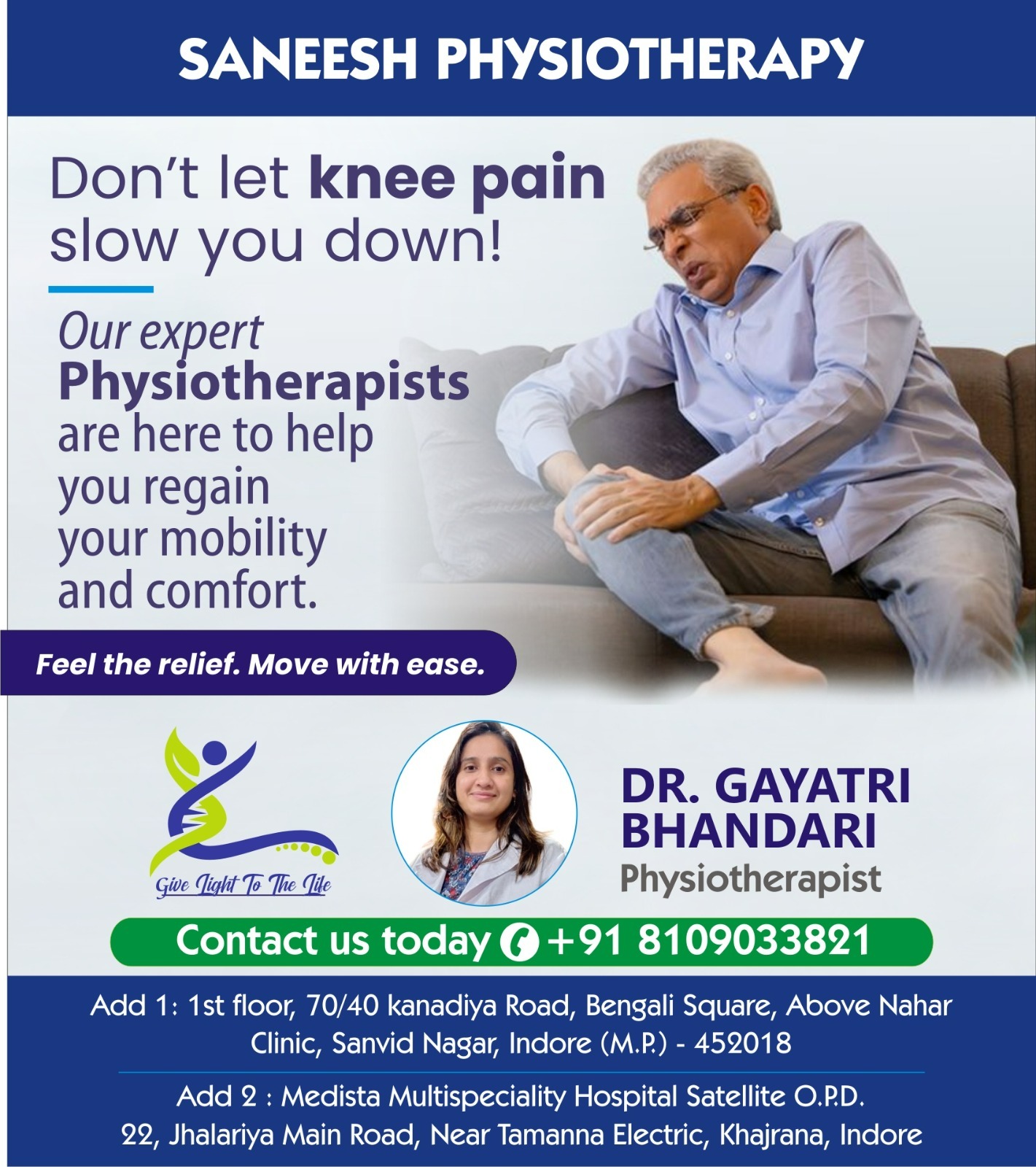
Knee Pain Physiotherapy Center in Bengali Square Indore: Restore Movement with Personalised Rehabilitation
Knee pain can make ordinary activities such as walking, climbing stairs, standing from a chair or completing household work feel unexpectedly difficult. Some people experience discomfort after an injury, while others gradually develop stiffness due to arthritis, muscle weakness, poor movement patterns or age-related changes. Whatever the cause, ignoring persistent pain may reduce mobility and affect confidence during daily movement.
Consulting a professional Knee Pain Physiotherapy Center in Bengali Square Indore can help identify movement-related problems and create a structured rehabilitation plan. Physiotherapy focuses on improving strength, flexibility, balance, joint control and functional ability without relying only on temporary symptom relief.
Saneesh Physiotherapy provides personalised physiotherapy support for people experiencing knee discomfort, stiffness, weakness and difficulty performing routine activities in Bengali Square, Indore.
What Is Knee Pain Physiotherapy?
Knee pain physiotherapy is a non-surgical rehabilitation approach designed to improve movement, reduce functional limitations and support recovery from different knee conditions. The treatment plan is generally based on the cause of pain, physical examination findings, age, activity level and personal goals.
A physiotherapist may assess:
The purpose is not only to focus on the painful area but also to identify contributing factors. For example, weak hip muscles, poor ankle mobility or an altered walking pattern may place additional stress on the knee.
Common Causes of Knee Pain
Knee discomfort can arise from several conditions. A proper evaluation is important because treatment suitable for one problem may not be appropriate for another.
Osteoarthritis of the Knee
Knee osteoarthritis is a common cause of pain and stiffness, particularly among middle-aged and older adults. Symptoms may develop gradually and can include:
A structured knee arthritis physiotherapy programme in Indore may include strengthening, mobility exercises, balance work and activity modification.
Ligament Injuries
The knee contains important ligaments that provide stability. Sports injuries, sudden twisting or falls can affect ligaments such as the ACL, PCL, MCL or LCL.
Symptoms may include instability, swelling, pain or difficulty changing direction. Some injuries are managed conservatively, while others require surgery followed by rehabilitation.
Meniscus Injury
The meniscus is a cartilage structure that helps absorb shock inside the knee. Twisting movements, sports injuries or age-related degeneration may lead to meniscus problems.
A person may experience:
Physiotherapy may be recommended depending on the type and severity of the injury.
Patellofemoral Pain
Patellofemoral pain is commonly felt around or behind the kneecap. It may become noticeable while using stairs, running, squatting or sitting for a long time.
Treatment may focus on improving hip and thigh strength, correcting movement patterns, gradually increasing activity and reducing unnecessary strain.
Muscle Weakness and Imbalance
Weak quadriceps, hamstrings, calf or hip muscles can affect knee control. When surrounding muscles do not provide adequate support, everyday movement may place greater stress on the joint.
Tendon-Related Pain
Tendons around the knee may become irritated because of repetitive activity, sudden increases in exercise, jumping or overuse. A carefully progressed strengthening programme is often more useful than complete inactivity.
Post-Surgical Weakness
People recovering from knee replacement, ligament reconstruction, meniscus surgery or fracture treatment commonly require physiotherapy to regain movement, strength and confidence.
When Should You Visit a Physiotherapist?
Occasional mild discomfort may improve with rest and sensible activity modification. However, professional assessment may be helpful when pain continues, limits movement or repeatedly returns.
Consider visiting a physiotherapist for knee pain in Bengali Square when:
Urgent medical evaluation may be required after severe trauma, inability to bear weight, visible deformity, sudden major swelling, fever with a hot swollen joint or loss of sensation.
How Is Knee Pain Assessed?
A physiotherapy assessment generally begins with a conversation about symptoms and daily difficulties.
Medical and Activity History
The physiotherapist may ask:
Movement Examination
Knee bending and straightening may be checked along with hip, ankle and lower-back movement. The physiotherapist may also observe squatting, standing, walking and stair use.
Strength Testing
The strength of muscles around the knee, hip and lower leg may be examined. Weakness can reduce joint control and make movement more demanding.
Balance and Stability Assessment
Balance testing helps identify whether a person can safely control the leg during standing and walking activities.
Functional Evaluation
The physiotherapist may assess tasks relevant to the individual, such as:
These findings help create an individualised knee rehabilitation plan in Indore.
Physiotherapy Treatments for Knee Pain
The exact treatment varies according to the diagnosis and physical findings. A personalised programme may combine several approaches.
Pain and Swelling Management
During the initial stage, the physiotherapist may recommend activity modification, positioning, gentle movement or other appropriate methods to manage discomfort.
The goal is not necessarily complete rest. Prolonged inactivity can increase stiffness and muscle weakness.
Range-of-Motion Exercises
Mobility exercises help maintain or improve knee bending and straightening. Restoring movement is especially important after surgery, injury or a period of reduced activity.
Strengthening Exercises
Strength training is a key component of many knee rehabilitation programmes. Exercises may target:
Improved strength can make walking, standing and stair climbing easier.
Balance and Proprioception Training
Proprioception refers to the body’s awareness of joint position. Injuries and prolonged pain can affect this ability.
Balance exercises may help improve control, confidence and stability during daily or sports activities.
Gait Training
Pain often changes how a person walks. Limping or avoiding weight on one side may increase stress elsewhere in the body.
Gait training can help improve step length, weight distribution, posture and walking confidence.
Manual Therapy
Where appropriate, a physiotherapist may use hands-on techniques to address joint stiffness, muscle tightness or movement limitations. Manual therapy is generally combined with exercise rather than used as the only treatment.
Functional Training
Rehabilitation should prepare the patient for real-life movement. Functional exercises may include controlled chair rises, step-ups, supported squats, walking drills or task-specific training.
Home Exercise Programme
Progress often depends on following the prescribed exercises between appointments. A realistic home programme should be easy to understand and suited to the patient’s ability.
Physiotherapy for Knee Osteoarthritis
People with knee osteoarthritis sometimes avoid movement because they fear further joint damage. However, appropriately selected exercise can help improve strength, flexibility and functional ability.
A knee osteoarthritis physiotherapy centre in Indore may focus on:
The programme should be adjusted according to symptoms rather than applying the same routine to everyone.
Rehabilitation After Knee Surgery
Post-operative physiotherapy may be required after procedures such as knee replacement, ACL reconstruction, meniscus surgery or fracture fixation.
The early goals may include:
Later stages may focus on strength, endurance, balance and return to daily or sporting activities.
Following the surgeon’s restrictions and the rehabilitation plan is important. Recovery timelines can differ significantly depending on the surgery, health status and individual progress.
Benefits of Timely Physiotherapy
Early assessment can help prevent avoidable movement limitations and provide clear guidance about safe activity.
Potential benefits include:
Physiotherapy outcomes vary, and not every knee condition can be managed through exercise alone. A responsible physiotherapist will recommend medical or orthopaedic evaluation when necessary.
Simple Ways to Protect Your Knees
General habits can support knee comfort and mobility.
Increase Activity Gradually
Avoid suddenly increasing walking, running, gym training or sports intensity. Give the body time to adapt.
Use Supportive Footwear
Comfortable and stable footwear may improve movement during walking and exercise.
Avoid Long Periods of Inactivity
Gentle movement breaks can help reduce stiffness after prolonged sitting.
Strengthen the Entire Lower Limb
Knee health depends on the hip, thigh, calf and ankle muscles. A balanced programme is better than focusing on only one area.
Use Proper Exercise Technique
Incorrect squatting, lunging or lifting technique may place unnecessary strain on the knees.
Do Not Exercise Through Severe Pain
Mild effort or temporary discomfort may occur during rehabilitation, but sharp or worsening pain should be discussed with the physiotherapist.
Why Choose a Local Physiotherapy Centre?
Receiving treatment near home or work can make regular attendance easier. Patients looking for knee pain treatment in Bengali Square Indore may benefit from convenient access, consistent follow-up and a programme adapted to their lifestyle.
A suitable physiotherapy centre should offer:
Saneesh Physiotherapy supports patients seeking rehabilitation for knee pain, stiffness, weakness and reduced mobility near Kanadia Road, Bengali Square, Sanvid Nagar and nearby Indore areas.
Frequently Asked Questions
1. Can physiotherapy help knee pain without surgery?
Many knee problems can improve through exercise-based rehabilitation, activity guidance and movement correction. However, the result depends on the underlying condition and its severity.
2. How many physiotherapy sessions are required?
There is no fixed number for every patient. The duration depends on the diagnosis, pain level, strength, mobility, surgery history and personal goals.
3. Should I stop walking when my knee hurts?
Complete rest is not always necessary and may increase weakness. A physiotherapist can guide you regarding suitable walking duration, pace and activity modification.
4. Is physiotherapy useful after knee replacement?
Yes. Physiotherapy commonly plays an important role in restoring movement, strength, balance and walking ability after knee replacement surgery.
Regain Your Mobility with the Right Support
Knee pain should not be allowed to gradually limit your independence, social activities or confidence. A timely assessment can help identify why the pain is occurring and what type of rehabilitation may support your recovery.
For personalised care from a Knee Pain Physiotherapy Center in Bengali Square Indore, schedule an evaluation and begin a structured plan designed around your mobility needs.
Contact Us today to book your physiotherapy consultation and take the first step towards easier, stronger and more confident movement.
| Tags: | #Knee Pain Physiotherapy Center in Bengali Square Indore |


