
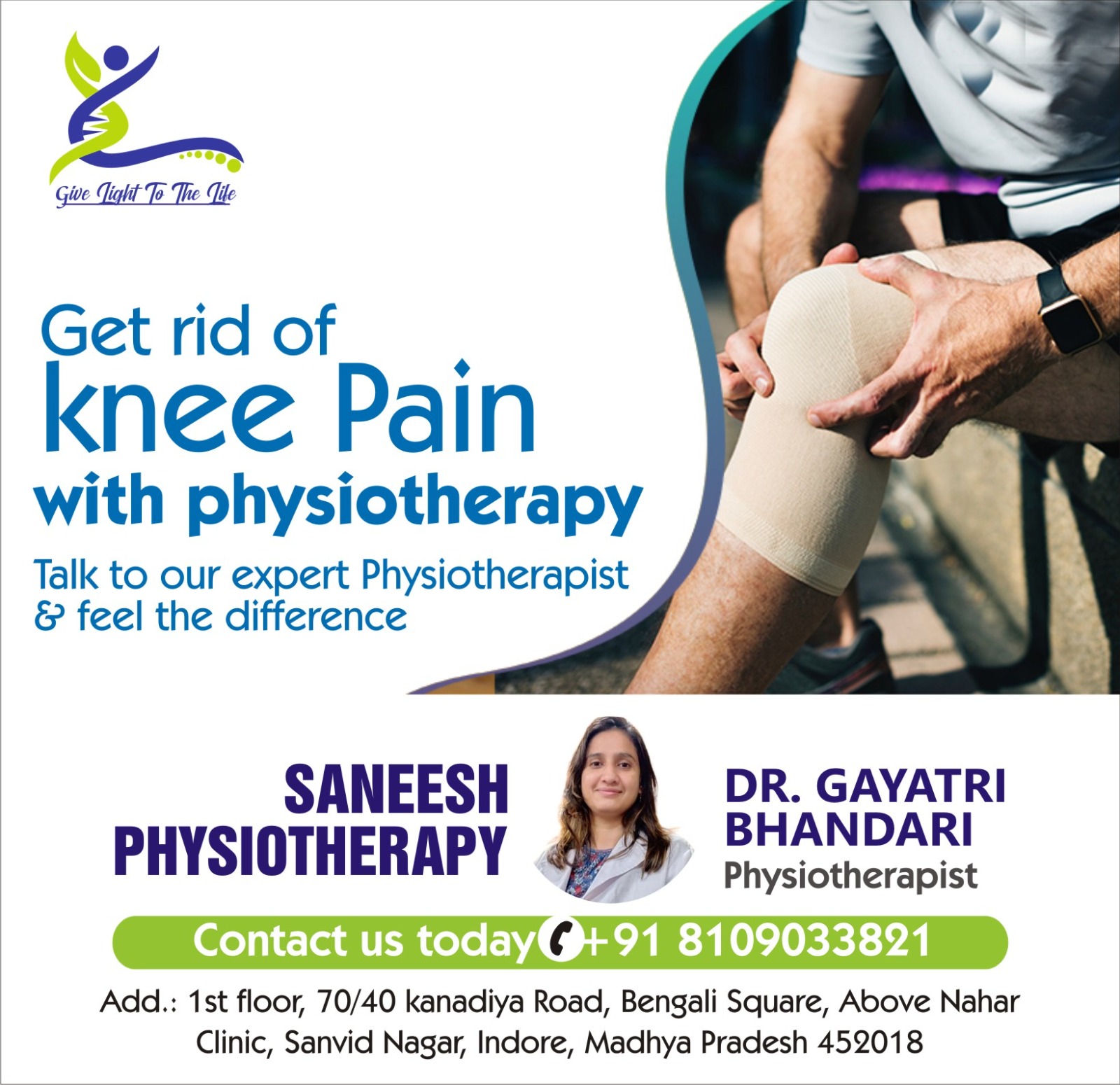
Knee Pain And Arthritis Physiotherapy in Dewas
Struggling with knee pain or arthritis? At Saneesh Physiotherapy and Rehabilitation Centre in Dewas, we offer advanced and personalized physiotherapy treatment for knee pain, osteoarthritis, joint stiffness, and mobility issues. Our expert physiotherapists focus on pain relief, strengthening exercises, posture correction, and long-term joint care to help you move comfortably and confidently. Whether your pain is due to aging, injury, or arthritis, we design customized rehab programs to reduce pain, improve flexibility, and enhance your quality of life.
Book your appointment today
Knee pain and arthritis can develop due to a variety of factors that affect the structure and function of the knee joint over time. One of the most common causes is osteoarthritis, a degenerative condition in which the protective cartilage cushioning the knee gradually wears down, leading to pain, stiffness, and reduced mobility. Age-related wear and tear significantly increase the risk, especially in individuals over 45 years.
Another major cause is previous knee injuries, such as ligament tears, meniscus damage, or fractures, which can alter joint mechanics and accelerate cartilage degeneration. Obesity and excess body weight also place increased stress on the knee joint, speeding up joint damage and worsening pain. Additionally, inflammatory conditions like rheumatoid arthritis cause joint inflammation and swelling, leading to long-term damage if not managed early. Poor posture, weak muscles, repetitive strain, and sedentary lifestyles further contribute to knee pain and arthritis progression.
Common contributing factors include:
• Age-related joint degeneration
• Osteoarthritis and rheumatoid arthritis
• Previous trauma or sports injuries
• Excess body weight
• Muscle weakness and joint imbalance
• Sedentary lifestyle or repetitive overuse
Role of Physiotherapy in Knee Pain and Arthritis
Physiotherapy plays a crucial role in managing knee pain and arthritis by addressing both symptoms and underlying causes. Rather than only masking pain, physiotherapy focuses on improving joint function, strength, and mobility, helping patients remain active and independent. A physiotherapist designs a personalized treatment plan based on the severity of arthritis, pain level, and functional limitations.
Through targeted exercises, manual therapy, and pain-relief techniques, physiotherapy helps reduce stiffness, enhance joint stability, and improve movement patterns. It also educates patients on proper posture, joint protection techniques, and activity modification, preventing further damage to the knee. Regular physiotherapy can significantly slow disease progression and reduce dependence on medications or invasive treatments.
• Pain and stiffness reduction
• Strengthening of surrounding muscles
• Improved joint flexibility and balance
• Correction of faulty movement patterns
• Functional improvement in daily activities
Benefits of Physiotherapy for Knee Arthritis
Physiotherapy offers multiple benefits for individuals suffering from knee arthritis, making it one of the most effective non-surgical treatment options. One of the primary benefits is pain relief achieved through exercises, manual therapy, and modalities such as heat or electrotherapy. Over time, strengthening the muscles around the knee reduces joint stress, providing better support and stability.
Another key advantage is improved mobility and flexibility, allowing patients to walk, climb stairs, and perform daily activities with greater ease. Physiotherapy also helps delay or even prevent the need for surgical intervention by maintaining joint health. Importantly, it empowers patients with knowledge and exercises they can continue at home, ensuring long-term improvement and better quality of life.
Key benefits include:
• Drug-free and non-invasive pain management
• Improved strength and joint stability
• Increased range of motion
• Reduced joint stiffness and swelling
• Enhanced balance and coordination
• Better independence and quality of life
The ideal time to start physiotherapy is as early as possible, even when knee pain or stiffness first appears. Early intervention can prevent further joint damage and slow the progression of arthritis. Individuals experiencing persistent knee pain, morning stiffness, swelling, or difficulty with daily activities should seek physiotherapy without delay.
Physiotherapy is beneficial at all stages of arthritis, from early degeneration to advanced joint changes. In early stages, it helps correct muscle imbalances and reduce stress on the knee. In later stages, it focuses on pain relief, mobility maintenance, and functional independence. Starting physiotherapy early often leads to better outcomes and reduces the likelihood of needing injections or surgery in the future.
You should consider physiotherapy if you have:
• Ongoing knee pain lasting more than a few weeks
• Stiffness or reduced knee movement
• Difficulty walking, standing, or climbing stairs
• Swelling or weakness around the knee
• A diagnosis of knee arthritis
Frequently Asked Questions
Q1. Is physiotherapy effective for knee arthritis?
Yes. Physiotherapy is one of the most effective non-surgical treatments for knee arthritis, helping reduce pain, improve mobility, and strengthen the joint.
Q2. How long does physiotherapy take to show results?
Most patients notice improvement within 4–6 weeks, depending on consistency and severity of the condition.
Q3. Is physiotherapy painful?
Physiotherapy should not be painful. Mild discomfort may occur initially, but exercises are tailored to the patient’s tolerance.
Q4. Can physiotherapy prevent knee replacement surgery?
In many cases, early and consistent physiotherapy can delay or even prevent the need for knee replacement.
Q5. How often should physiotherapy sessions be done?
Typically, sessions are recommended 2–3 times per week, along with home exercises for best results.
Physiotherapy | Physical therapy | Rehabilitation | Pain management | Physiotherapist | Orthopedic physiotherapy | Neurological physiotherapy | Pediatric physiotherapy | Geriatric physiotherapy | Sports physiotherapy | Back pain treatment | Neck pain relief | Joint pain therapy | Knee pain physiotherapy | Shoulder pain treatment | Arthritis physiotherapy | Osteoporosis physiotherapy | Fracture rehabilitation | Post-surgery physiotherapy | Manual therapy | Exercise therapy | Posture correction | Balance training | Mobility improvement | Strength training | Electrotherapy | Massage therapy | Chronic pain treatment | Stroke rehabilitation | Cerebral palsy therapy | Injury prevention | Muscle strengthening | Physiotherapy exercises | Home physiotherapy | Physiotherapy clinic | Physiotherapy sessions | Flexibility improvement | Recovery therapy | Sports injury rehabilitation | Physiotherapy in Indore
#KneePainTreatmentDewas #ArthritisPhysiotherapy #PhysiotherapyInDewas #SaneeshPhysiotherapy
| Tags: | #Knee Pain And Arthritis Physiotherapy in Dewas, #SaneeshPhysiotherapy, #PhysiotherapyInDewas, #ArthritisPhysiotherapy |


