
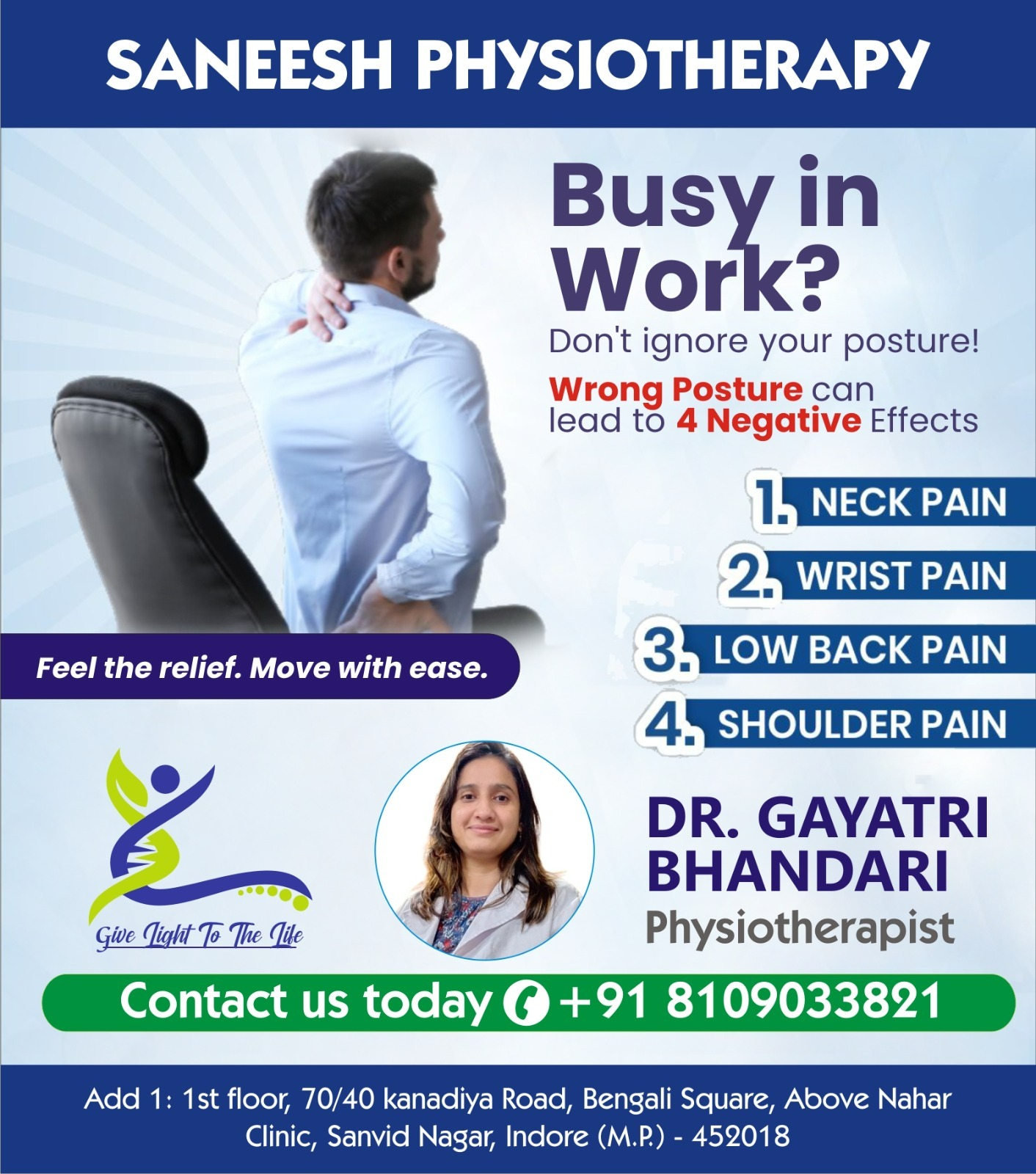
Best Physiotherapist in Indore
Long working hours, extended screen use, limited movement, and incorrect sitting habits can gradually affect the body. Many people begin with mild neck stiffness or occasional lower back discomfort, but the problem may progress when posture-related strain continues every day. Wrist pain, shoulder tightness, muscle weakness, reduced flexibility, and recurring headaches may also be associated with poor workstation habits.
Consulting the Best Physiotherapist in Indore can help identify movement limitations, muscle imbalances, posture-related stress, and functional difficulties. Physiotherapy is not limited to temporary pain relief. A structured rehabilitation plan may support better mobility, strength, balance, body awareness, and confidence during everyday activities.
Saneesh physiotherapy and rehabilitation centre " Dr. Gayatri Bhandari provides personalised physiotherapy support for posture correction, musculoskeletal pain, mobility concerns, injury rehabilitation, and functional recovery in Indore.
Posture refers to the way the body is positioned while sitting, standing, walking, lifting, or completing daily tasks. There is no single posture that must be maintained throughout the day. However, remaining in an uncomfortable or unsupported position for extended periods may increase strain on muscles and joints.
A poorly arranged workstation may lead to:
The body is designed to move. Even a seemingly correct sitting position may become uncomfortable when maintained continuously without breaks. Professional posture correction physiotherapy in Indore focuses on improving body positioning while also encouraging regular movement.
Looking down at a laptop, mobile phone, or poorly positioned monitor can place additional stress on the neck. Over time, the muscles surrounding the neck and upper back may become tight or fatigued.
Common symptoms include:
A neck pain physiotherapist in Indore may evaluate neck movement, upper-back mobility, shoulder positioning, muscle strength, and daily work habits before planning treatment.
Typing, using a mouse, holding a mobile device, or repeating hand movements may irritate the wrist and forearm. Incorrect keyboard height and unsupported forearms can increase discomfort.
Wrist-related symptoms may include:
Physiotherapy may involve movement assessment, ergonomic correction, stretching, strengthening, and advice regarding activity modification.
The lower back often receives limited support during long sitting hours. Slouching, sitting on the edge of a chair, keeping a wallet in the back pocket, or avoiding movement for several hours may contribute to discomfort.
A low back pain physiotherapist in Indore may assess spinal mobility, hip flexibility, core control, leg strength, and sitting habits. Treatment is planned according to the cause and severity of the symptoms rather than relying on a standard exercise chart.
Rounded shoulders and prolonged desk work may affect the muscles around the shoulder blade, upper back, and neck. Repetitive reaching, poor arm support, or previous injuries may also contribute to pain.
Symptoms can include:
Early physiotherapy assessment may help prevent compensatory movement and further loss of function.
A professional physiotherapy consultation in Indore generally begins with a detailed discussion about symptoms, daily routine, work demands, previous injuries, health conditions, and physical activity.
The physiotherapist may assess:
This evaluation helps determine whether the problem is mainly related to stiffness, weakness, poor endurance, joint restriction, nerve irritation, repetitive strain, or a combination of factors.
Physiotherapy aims to improve function rather than simply masking symptoms. Treatment may include several methods depending on the individual’s condition.
The initial phase may focus on reducing discomfort and helping the person move more comfortably. Manual techniques, guided movement, heat or cold advice, and suitable modalities may be used when appropriate.
Restricted movement in the neck, upper back, shoulders, hips, or lower back can affect posture. Gentle mobility exercises may help restore comfortable movement.
Weak muscles may struggle to support the body during prolonged sitting or standing. Strengthening may focus on:
Tight chest, neck, hip, thigh, or forearm muscles may contribute to posture-related strain. Stretching is selected according to the assessment rather than applied randomly.
Patients may learn better techniques for sitting, standing, bending, lifting, carrying bags, and using digital devices.
A posture specialist physiotherapist in Indore may suggest practical adjustments for the chair, desk, screen, keyboard, mouse, and foot position.
Small changes can reduce unnecessary strain during the workday.
The top portion of the screen should generally be near eye level, and the monitor should be positioned directly in front of the user. Looking continuously to one side may stress the neck.
Sit back in the chair instead of leaning forward. A suitable backrest or small lumbar support may improve comfort.
Both feet should rest comfortably on the floor or on a footrest. Avoid sitting with the legs unsupported for prolonged periods.
The elbows should remain close to the body, and the wrists should not stay sharply bent. Frequently used items should remain within easy reach.
Use earphones or a headset during long calls to prevent repeated neck strain.
Stand, walk, stretch, or adjust your sitting position at regular intervals. Movement breaks are often more useful than trying to hold one “perfect” posture all day.
Professional physiotherapy services in Indore may support people with different lifestyles and rehabilitation needs.
Desk workers may require care for neck pain, back pain, wrist strain, headaches, shoulder tightness, and reduced physical activity.
Physiotherapy may support balance, walking confidence, mobility, strength, and independence during daily tasks.
Sports physiotherapy can assist with injury rehabilitation, flexibility, strength, coordination, and gradual return to activity.
After orthopaedic or other relevant procedures, rehabilitation may help restore movement, strength, and function according to the surgeon’s advice.
People with knee, hip, shoulder, ankle, or spinal discomfort may benefit from assessment and condition-specific exercise planning.
Rehabilitation may be required after fractures, sprains, muscle injuries, falls, or prolonged immobilisation.
You should consider consulting a physiotherapist near me in Indore when:
Early assessment may help address movement problems before they begin affecting more activities.
Online exercise videos may appear convenient, but the same movement is not appropriate for every patient. A person with muscle tightness may need a different plan from someone with joint instability, nerve symptoms, recent surgery, or severe weakness.
A personalised physiotherapy treatment in Indore considers:
Exercises may be gradually modified as strength, mobility, and tolerance improve.
Recovery is often a gradual process. Follow-up sessions allow the physiotherapist to evaluate progress, correct exercise technique, and adjust the rehabilitation plan.
Regular monitoring may help:
The number of sessions varies according to the condition, severity, duration, and patient response.
Physiotherapy works best when supported by practical daily habits.
People searching for a physiotherapy clinic near Bengali Square Indore may prefer a conveniently accessible location for regular rehabilitation appointments. Physiotherapy support may also be sought by residents of:
Local access can make it easier to maintain treatment continuity and attend follow-up sessions.
Yes. Physiotherapy may help identify posture-related strain, muscle weakness, stiffness, and workstation issues. Treatment can include exercises, ergonomic guidance, mobility work, and movement retraining.
The duration varies according to symptom severity, work habits, muscle strength, flexibility, and exercise consistency. Some people notice gradual improvement within a few sessions, while long-standing problems may require extended rehabilitation.
Complete rest is not always necessary. A physiotherapist may recommend activity modification, movement breaks, ergonomic changes, and suitable exercises. Severe pain, weakness, numbness, or other concerning symptoms should be medically evaluated.
No. Physiotherapy is also used for posture-related pain, sports injuries, joint stiffness, muscle weakness, balance problems, workplace strain, and movement limitations.
Neck pain, wrist discomfort, lower-back strain, and shoulder stiffness should not become accepted parts of a busy work routine. Timely physiotherapy can help identify the movement factors contributing to pain and create a practical rehabilitation plan suited to your lifestyle.
For consultation with the Best Physiotherapist in Indore, contact Saneesh physiotherapy and rehabilitation centre " Dr. Gayatri Bhandari for posture assessment, personalised exercises, pain management, mobility improvement, and rehabilitation support.
Contact Us Today to Book Your Physiotherapy Appointment in Indore.
| Tags: | #Best Physiotherapist in Indore |


