
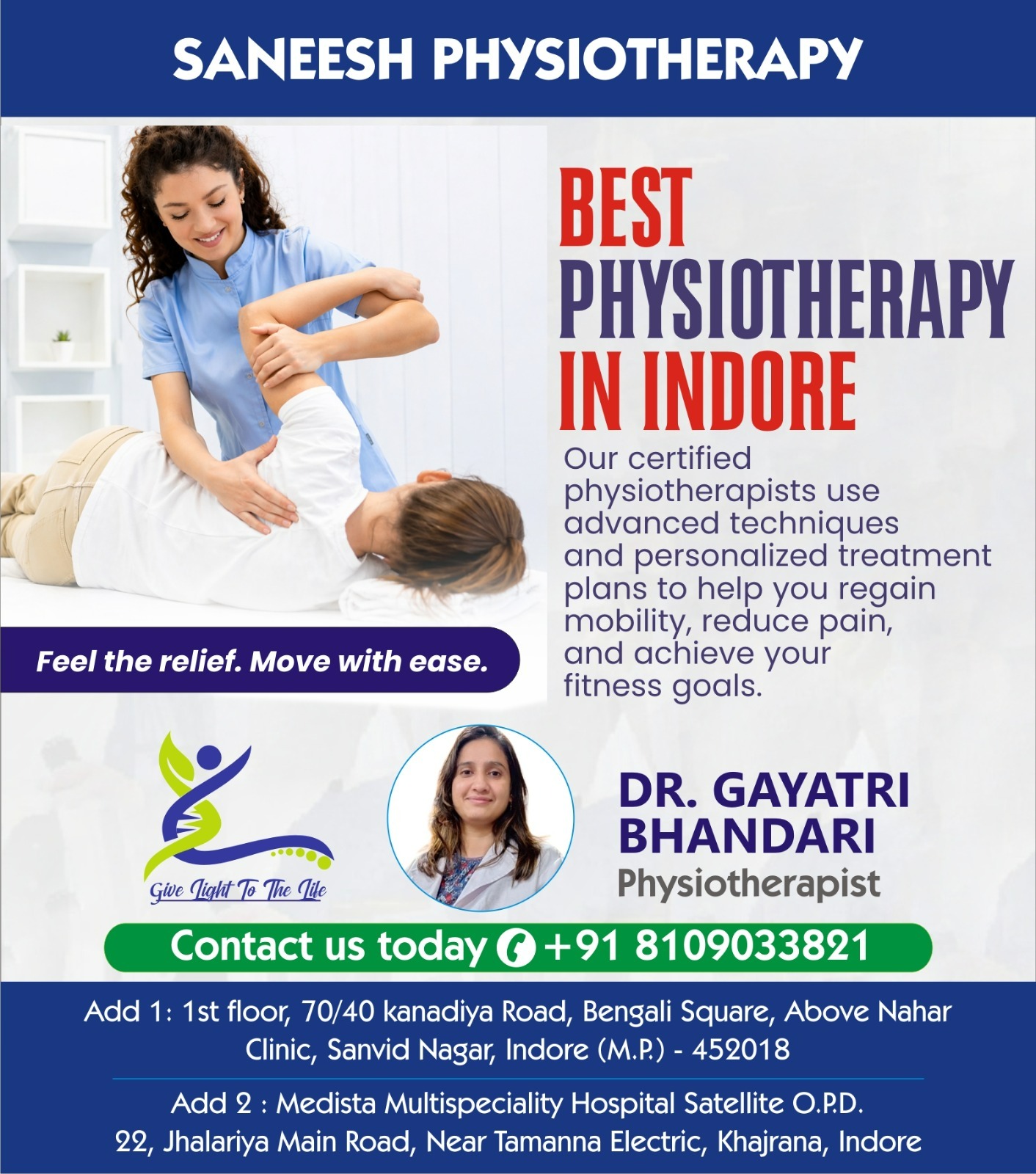
Best Physiotherapy in Indore for Pain Relief, Mobility and Rehabilitation
Pain, stiffness, weakness or reduced movement can interfere with work, sleep, exercise and everyday independence. These problems may develop after an injury, surgery, long periods of sitting, repetitive work or an age-related condition. Physiotherapy focuses on restoring movement, improving physical function and helping patients return to their routine through structured exercises and personalised rehabilitation.
People searching for the Best Physiotherapy in Indore can consult Saneesh Physiotherapy and Rehabilitation Centre – Dr. Gayatri Bhandari for an assessment-based treatment plan designed around their condition, mobility level and recovery goals.
Physiotherapy is a healthcare approach that helps improve mobility, strength, flexibility, balance and physical comfort. It may include therapeutic exercises, manual techniques, posture correction, movement training and rehabilitation guidance.
Rather than focusing only on temporary symptom relief, physiotherapy aims to understand how the problem affects movement. The treatment plan may address muscle weakness, joint stiffness, poor posture, limited flexibility, movement fear or reduced coordination.
Professional physiotherapy treatment in Indore may be suitable for people experiencing:
The recommended approach depends on the diagnosis, symptom duration, medical history and functional requirements of the patient.
Two patients with pain in the same body area may have different causes and movement limitations. One person may develop knee discomfort because of muscle weakness, while another may have reduced joint mobility or poor walking mechanics.
A personalised physiotherapy rehabilitation plan in Indore may consider:
This individualised approach helps the physiotherapist select suitable exercises and gradually adjust the plan according to progress.
Physiotherapy can support recovery in various musculoskeletal, neurological and post-operative conditions.
Back discomfort may occur because of prolonged sitting, poor posture, weak core muscles, lifting strain or reduced spinal mobility. Back pain physiotherapy in Indore may include mobility exercises, posture training, strengthening and activity modification.
The goal is to improve movement confidence and reduce repeated strain during daily tasks.
Long hours spent on computers and mobile devices can place stress on the neck and upper-back muscles. Some people also experience stiffness, headaches or discomfort while turning the head.
A physiotherapist may assess posture, shoulder position, muscle tightness and movement patterns before planning treatment.
Knee discomfort may affect walking, stair climbing, squatting and standing from a chair. It can be associated with injury, weakness, overuse, arthritis or recovery after surgery.
Knee pain physiotherapy in Indore may focus on strengthening the muscles around the knee and hip, improving flexibility and correcting movement patterns that place excessive pressure on the joint.
Shoulder problems may limit overhead movement, dressing, lifting and sleeping comfortably. Physiotherapy can help manage stiffness, muscle imbalance, rotator cuff problems and post-injury weakness.
Athletes and physically active individuals may experience ligament injuries, muscle strains, ankle sprains, shoulder problems or repetitive overuse conditions.
Sports injury rehabilitation in Indore aims to rebuild strength, coordination, flexibility and sport-specific movement before a safe return to activity.
Limited joint movement may develop after an injury, surgery, immobilisation or long-term inactivity. Controlled mobility exercises can help restore flexibility without placing unnecessary stress on healing structures.
Surgery may correct an underlying structural problem, but rehabilitation is often essential for restoring movement and function. Physiotherapy after surgery should follow the surgeon’s recommendations and the healing stage.
Post-operative physiotherapy in Indore may be advised after:
The rehabilitation process may include pain-management strategies, mobility exercises, strengthening, walking training and gradual return to daily activities.
Early exercises are usually gentle and carefully supervised. As healing progresses, the programme may become more challenging.
Joint replacement can improve movement for suitable patients, but recovery requires consistent rehabilitation. Physiotherapy may help patients learn how to stand, walk, climb stairs and perform daily activities safely.
A structured joint replacement rehabilitation programme in Indore can focus on:
The pace of recovery varies between individuals. Age, general health, pre-surgery strength and regular exercise participation can influence progress.
Arthritis may lead to joint pain, stiffness and reduced confidence in movement. Avoiding activity completely can sometimes increase weakness and make routine tasks more difficult.
Physiotherapy may help people with arthritis through:
Senior citizen physiotherapy in Indore may also support older adults who experience weakness, reduced balance, fear of falling or difficulty performing daily activities.
The aim is not to force painful movements, but to build safer and more comfortable function within the person’s capacity.
Neurological conditions can affect balance, coordination, strength and movement control. Rehabilitation may be useful for selected patients after stroke or in conditions that influence the nervous system.
A neurological physiotherapy programme may involve:
The treatment plan is developed according to the patient’s abilities and medical condition. Progress may require regular practice and long-term support.
Modern work habits often involve prolonged sitting, screen use and limited physical movement. Poor desk setup and repetitive tasks may contribute to neck, shoulder, wrist or lower-back discomfort.
Posture correction physiotherapy in Indore may help by assessing:
Patients may receive practical guidance that can be applied at home and work. Small changes in posture and movement frequency can reduce repeated physical strain.
The first session generally begins with a discussion about symptoms, injury history, medical conditions and daily difficulties. The physiotherapist may ask when the problem started, which activities increase discomfort and what the patient hopes to achieve.
The physical assessment may include:
Based on the findings, the physiotherapist explains the possible movement-related concerns and develops a suitable treatment plan.
The techniques used depend on the condition and recovery stage.
Exercises are selected to improve strength, flexibility, balance, endurance and movement control. They may be modified according to the patient’s comfort and ability.
Hands-on techniques may be used to improve joint mobility, reduce muscle tightness or assist movement.
Patients recovering from injury or surgery may require guidance for standing, walking, stair climbing and changing positions safely.
These exercises are useful for people who feel unstable or have reduced confidence while walking.
The physiotherapist may suggest practical adjustments for sitting, sleeping, lifting and workplace activities.
A home routine helps patients continue rehabilitation between clinic sessions. Correct technique and consistency are important for meaningful progress.
Appropriate physiotherapy can support patients in several ways:
Results depend on the condition, severity, treatment consistency and participation in the recommended exercise programme.
Patients seeking a physiotherapy clinic near Bengali Square can access treatment around Kanadiya Road, Sanvid Nagar and nearby locations. Physiotherapy support may also be convenient for residents of Khajrana, Vijay Nagar, Scheme No. 54, Pipliyahana, Palasia, Mahalaxmi Nagar, Nipania, Bengali Square and surrounding parts of Indore.
Choosing a nearby physiotherapist in Indore can make regular appointments and follow-up sessions easier, particularly during post-operative or long-term rehabilitation.
Patients play an active role in their recovery. The following habits can support the treatment plan:
Recovery is not always linear. Some days may feel easier than others, but consistent rehabilitation can help build long-term function.
The number of sessions depends on the diagnosis, severity, recovery goals and response to treatment. Some minor problems may improve with a brief programme, while post-operative or neurological rehabilitation may require longer care.
Physiotherapy may help selected patients with long-standing pain by improving strength, mobility, posture and confidence in movement. The approach should be planned after a proper assessment.
Mild muscle effort or stretching discomfort may occur during some exercises, but severe or increasing pain should not be ignored. The physiotherapist can modify the movement or intensity.
Yes, but the timing and type of exercises depend on the surgery and the surgeon’s instructions. Rehabilitation should follow the appropriate healing stages.
Pain, weakness and limited movement can gradually affect independence and quality of life. Early assessment can help identify movement limitations and create a practical recovery plan suited to your condition.
For personalised Best Physiotherapy in Indore, contact Saneesh Physiotherapy and Rehabilitation Centre – Dr. Gayatri Bhandari. Book an appointment for pain management, post-surgery rehabilitation, sports-injury recovery, posture correction or mobility improvement.
Contact Us Today to Begin Your Physiotherapy and Rehabilitation Journey.
| Tags: | #Best Physiotherapy in Indore |


